Aktuell
In Depends
05.07. — 03.10.2026
Artist
Mike Bouchet
Description
In Depends
An exhibition by Mike Bouchet at Kunstverein Wiesen, in the bank, the castle and the barn
What something is worth, what it means and even what it appears to be depends on where it is placed. This instability lies at the centre of Mike Bouchet’s work. His practice begins with things that are already familiar: money, cola bottles, suburban houses, shopping carts, celebrity images and fast-food photography. By altering their scale, material, function or surroundings, Bouchet makes the promises attached to them — comfort, status, individuality and abundance — appear at once seductive and absurd. His work does not observe consumer culture from a safe distance; it operates from within its images, products and contradictions.
For In Depends, Bouchet has developed an exhibition that extends across three buildings in the village of Wiesen: the former bank, the historic Schloss and an agricultural barn. Each site retains the memory of its former purpose and actively changes how the works are read. The exhibition becomes a route through the village and, at the same time, through different systems of value: financial value, political and symbolic power, domestic aspiration, material waste and physical consumption.
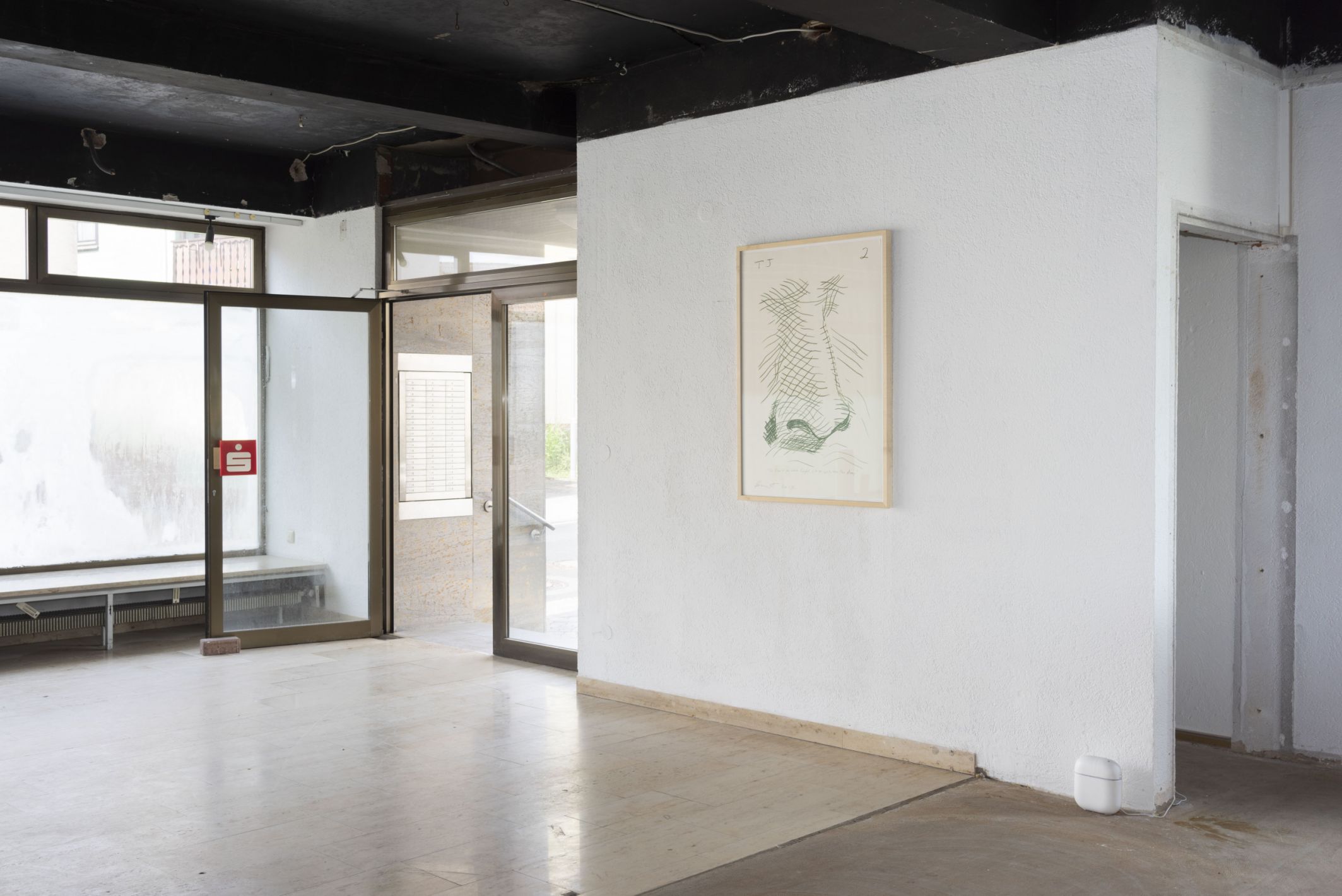
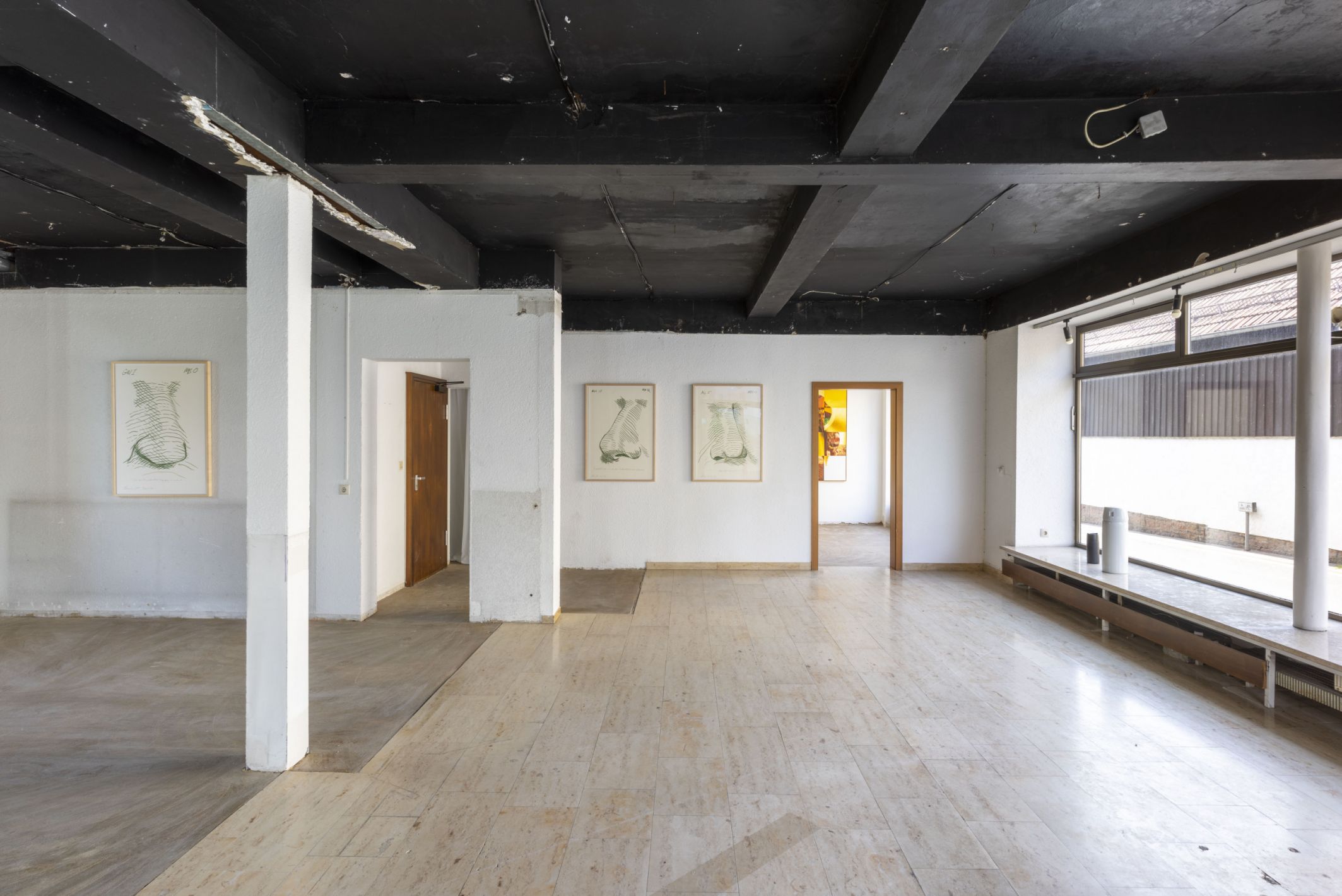
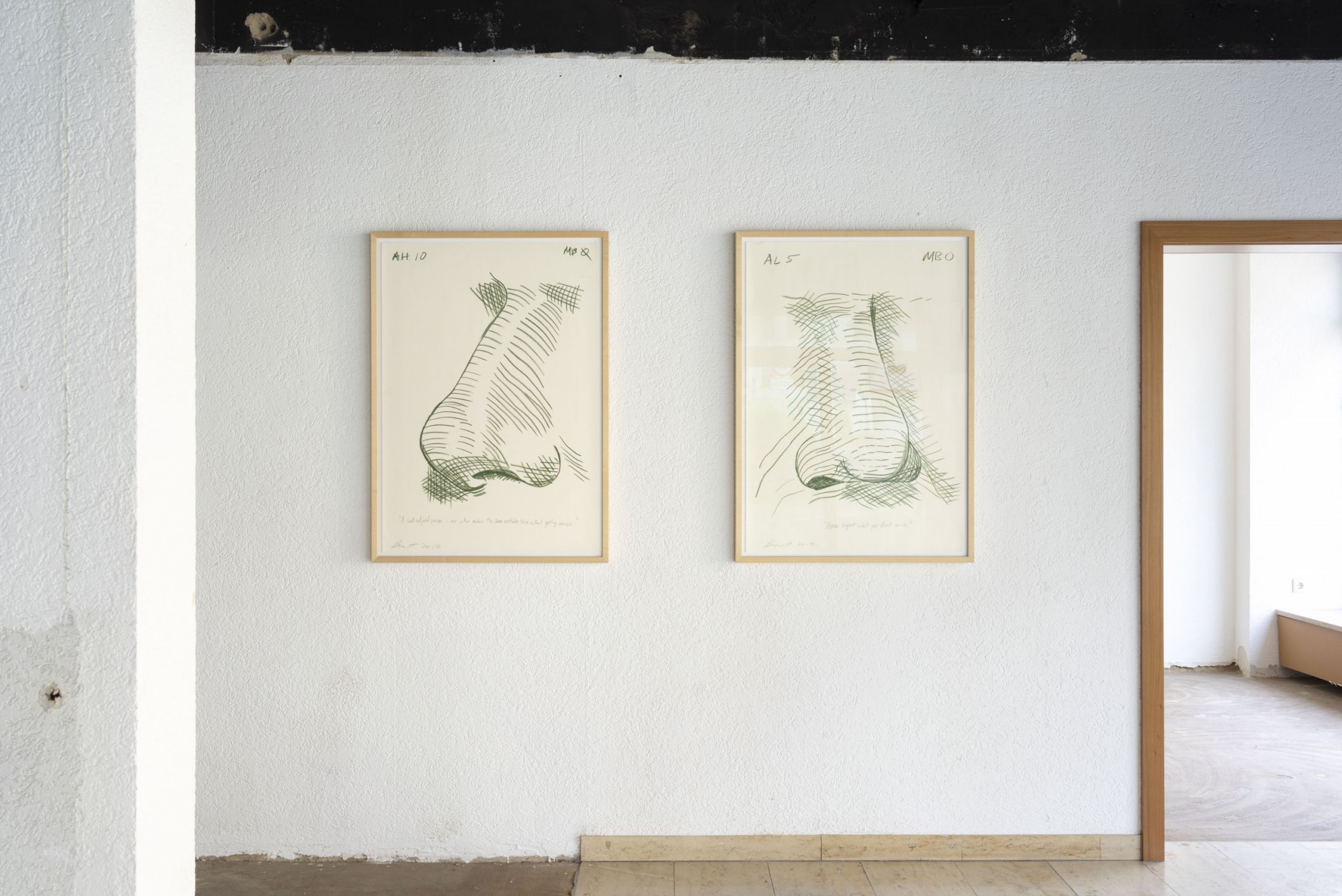
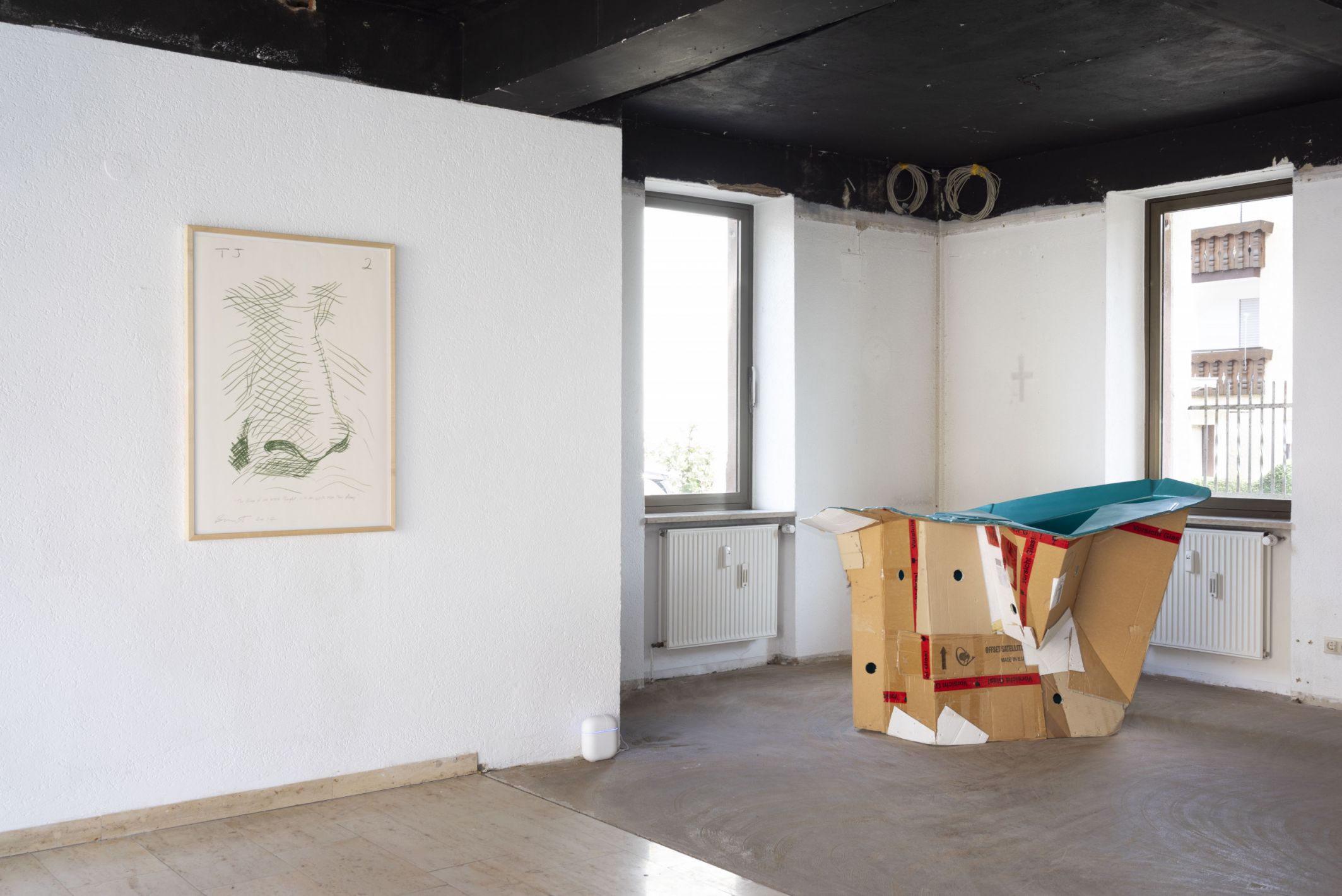
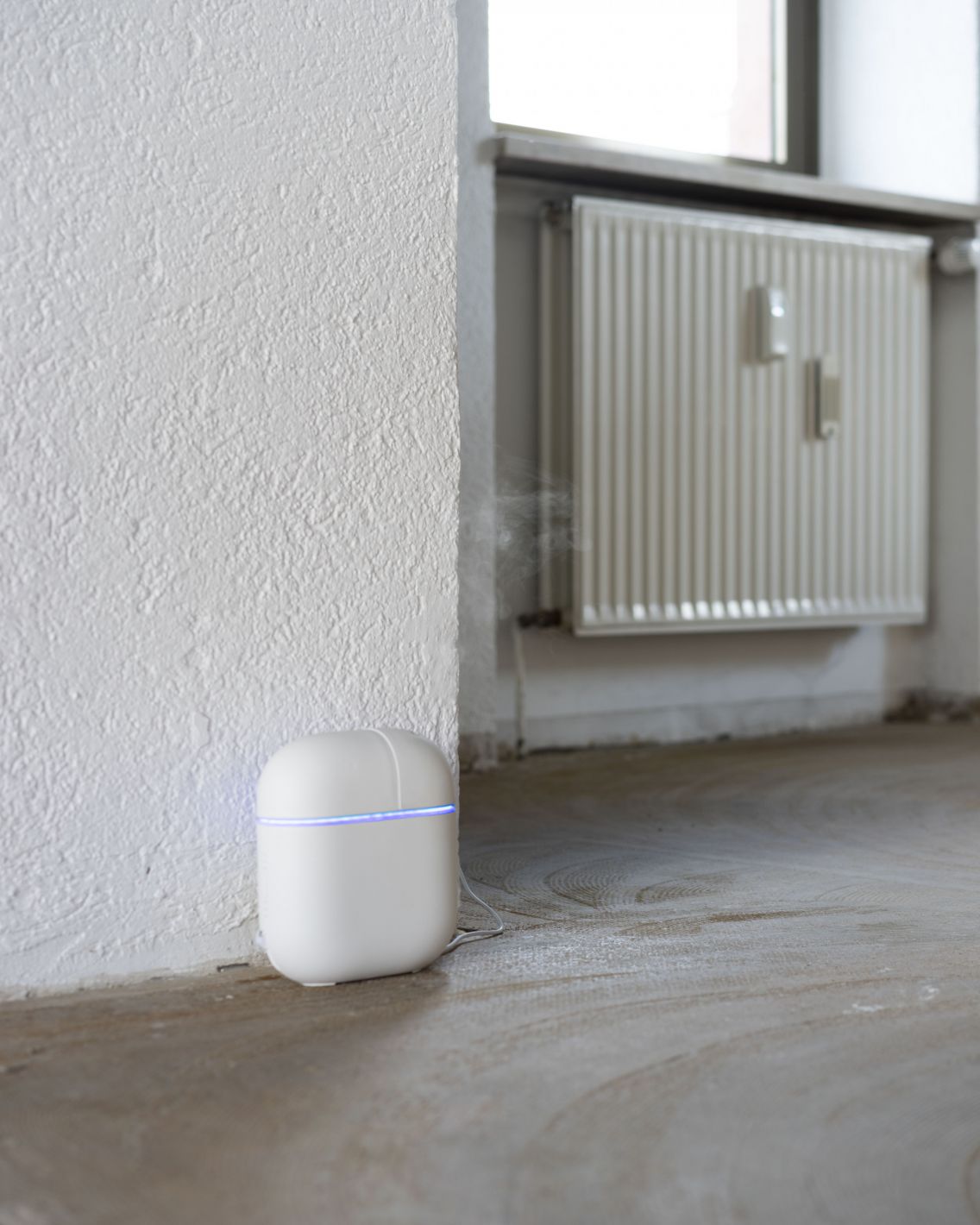
The exhibition begins in the Sparkassen building with Tender, whose synthetic scent of handled US dollar notes permeates the former bank. The invisible fragrance is accompanied by five Dollar Drawings, in which the profiles — and particularly the noses — of former American presidents emerge from the graphic language of financial charts. Initials and fragments of quotations link these political figures to the rhetoric, promises and ideologies surrounding money. In the same space, Boris Becker Jacuzzi introduces a very different image of value: a strangely improvised monument to celebrity, leisure and personalised luxury. Together, the works bring money, political representation and aspiration into a building once dedicated to saving, lending and trust, giving otherwise abstract systems of value an unexpectedly physical and humorous presence.
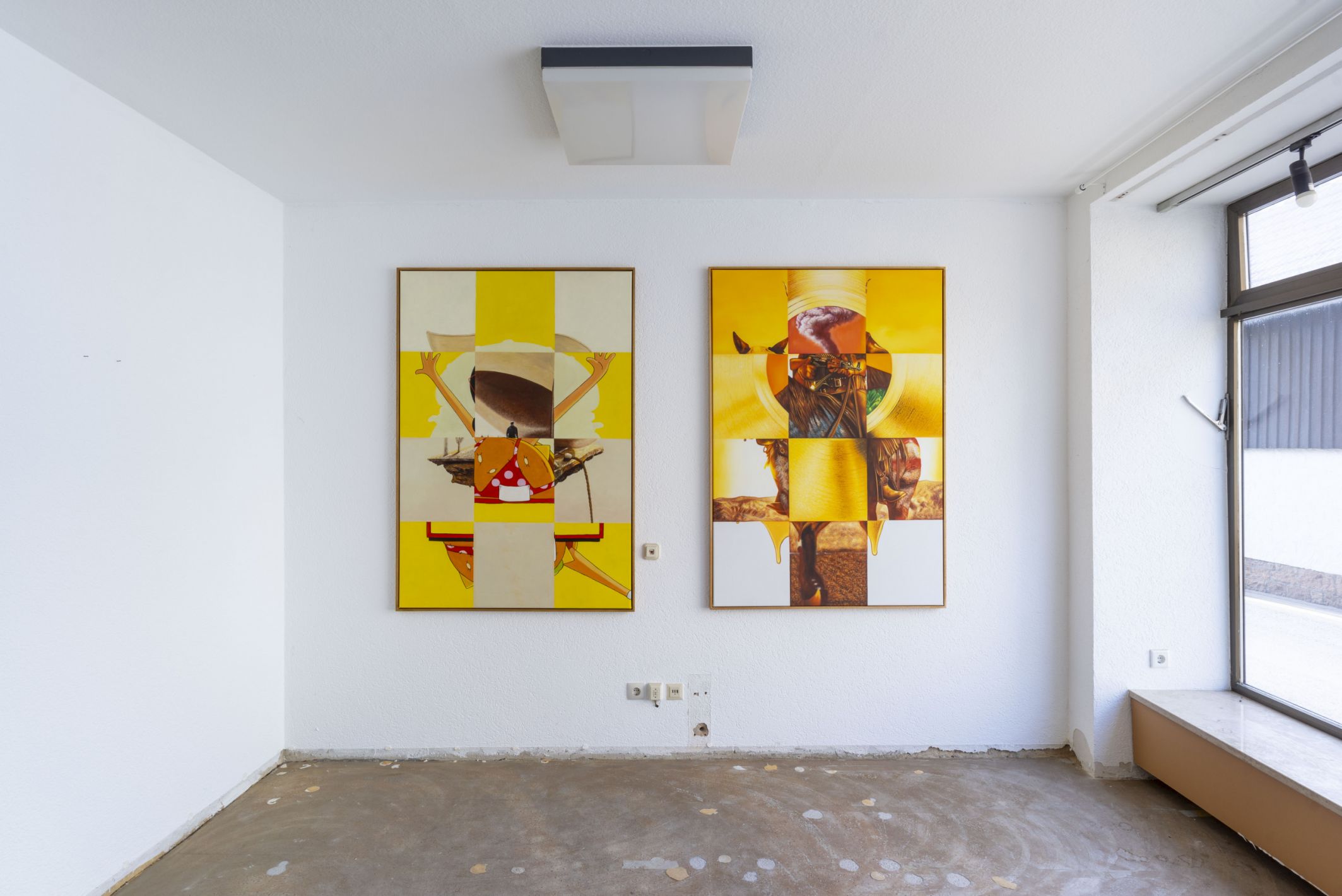
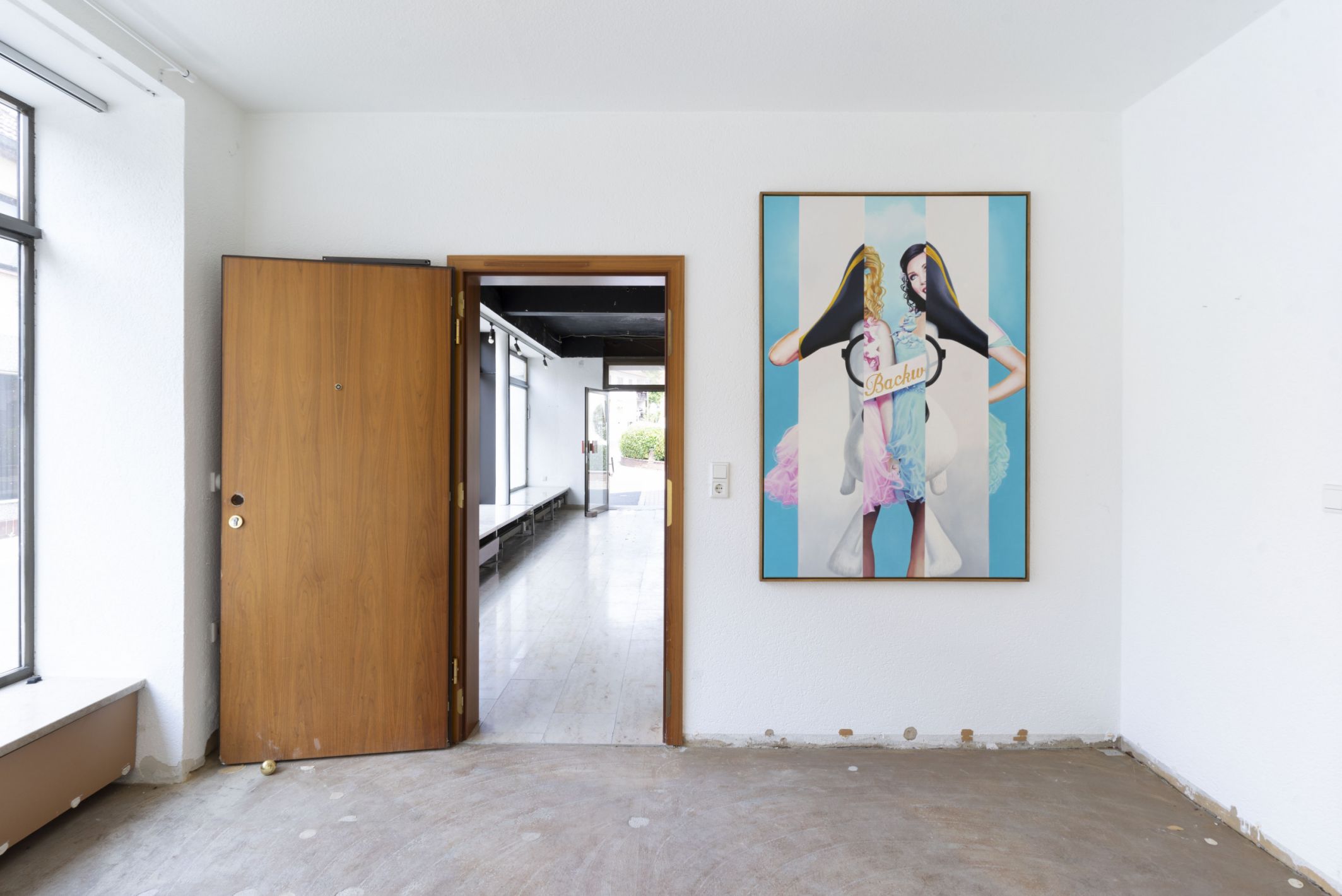
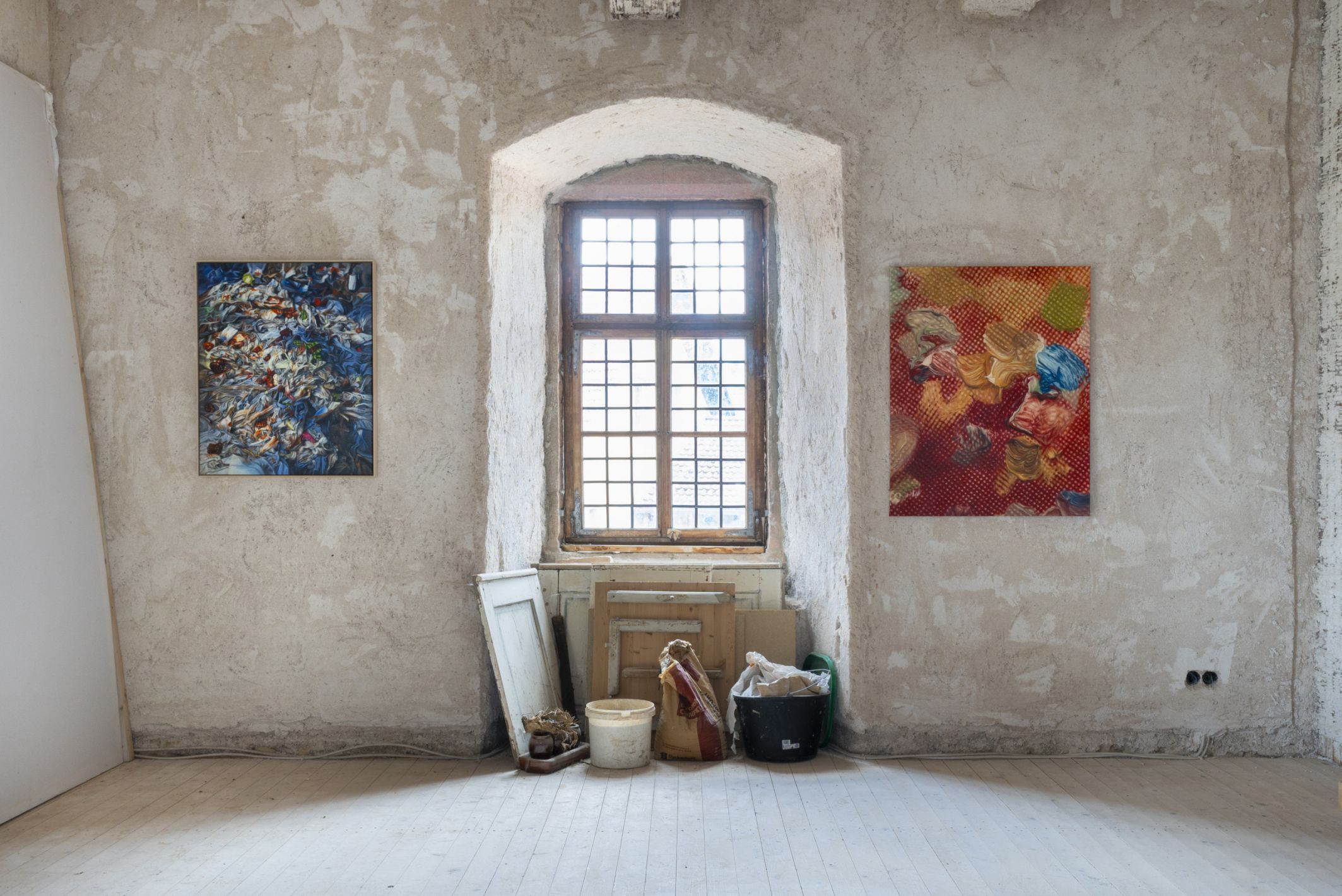
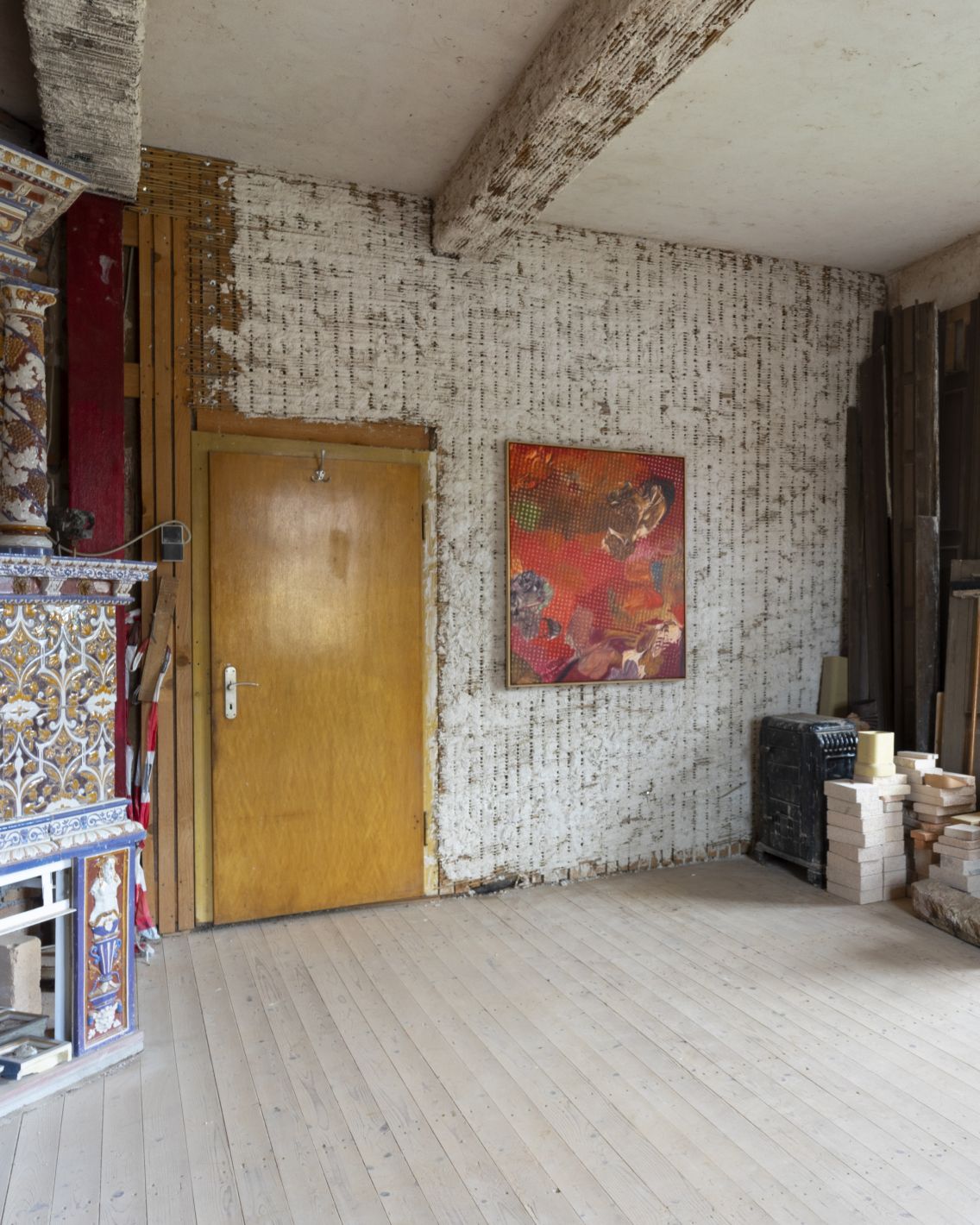
Three further paintings introduce another recurring strategy in Bouchet’s work. Images drawn from popular culture are fragmented and rearranged until their original messages become unstable. The source remains recognisable, yet its familiarity no longer produces certainty.
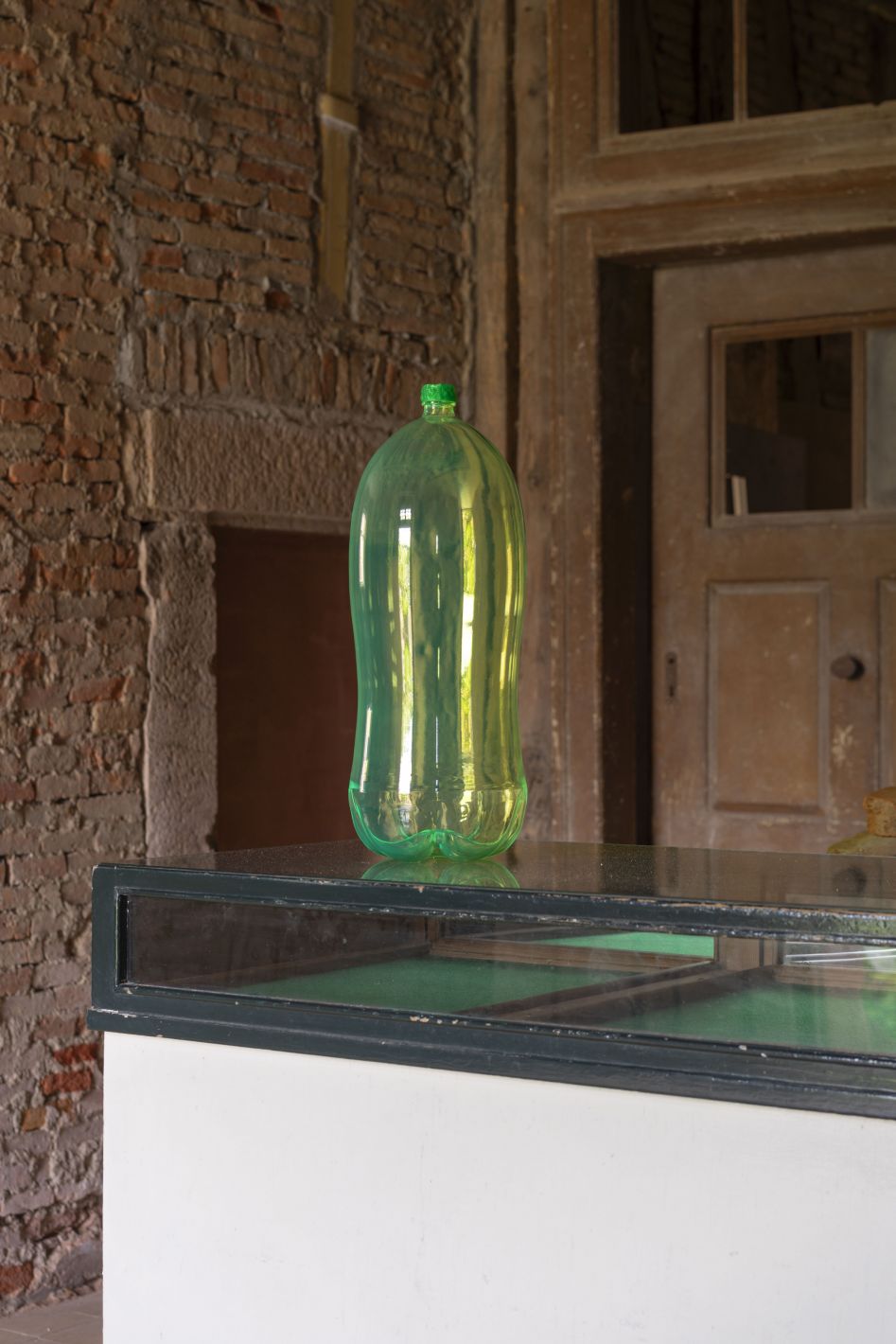
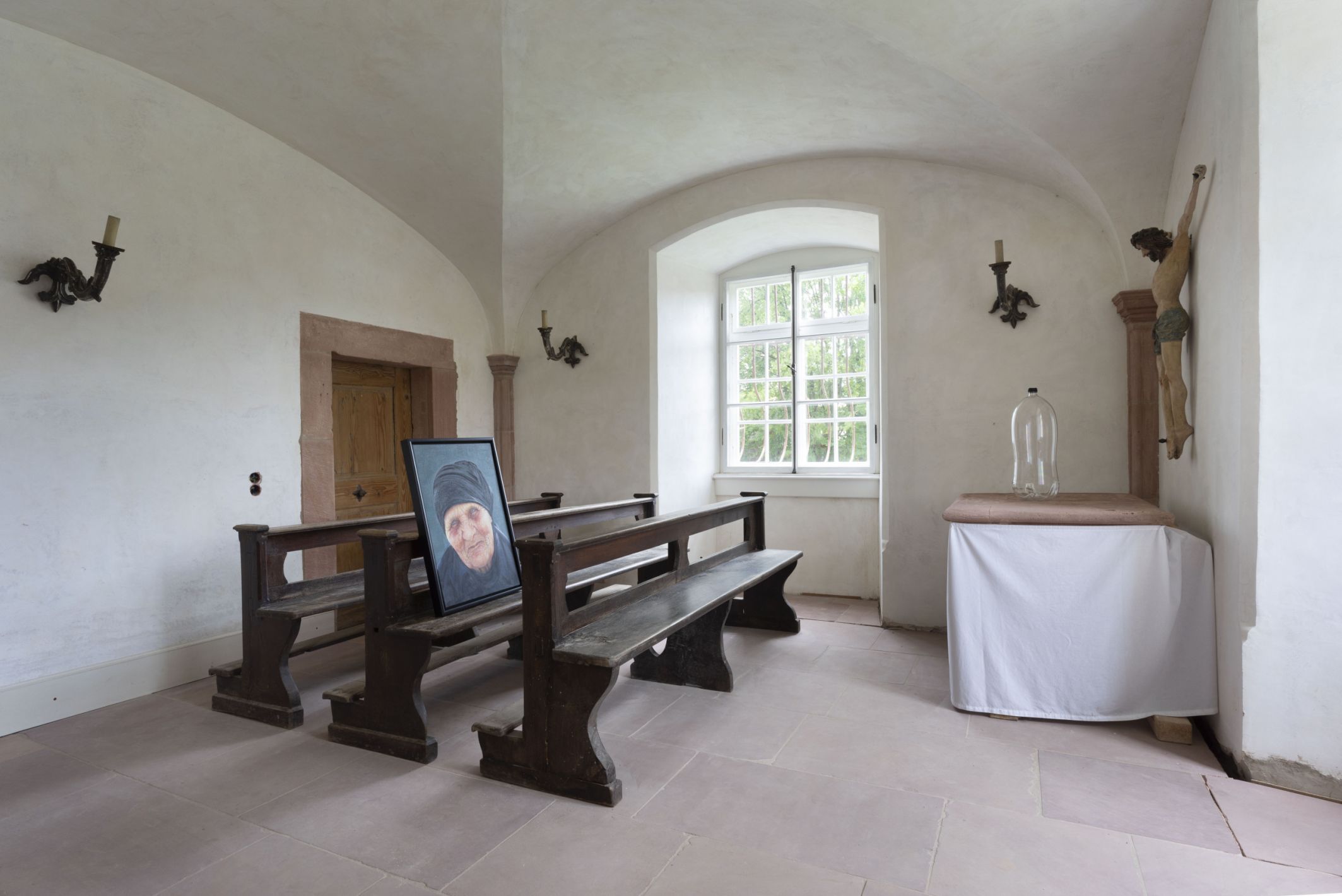
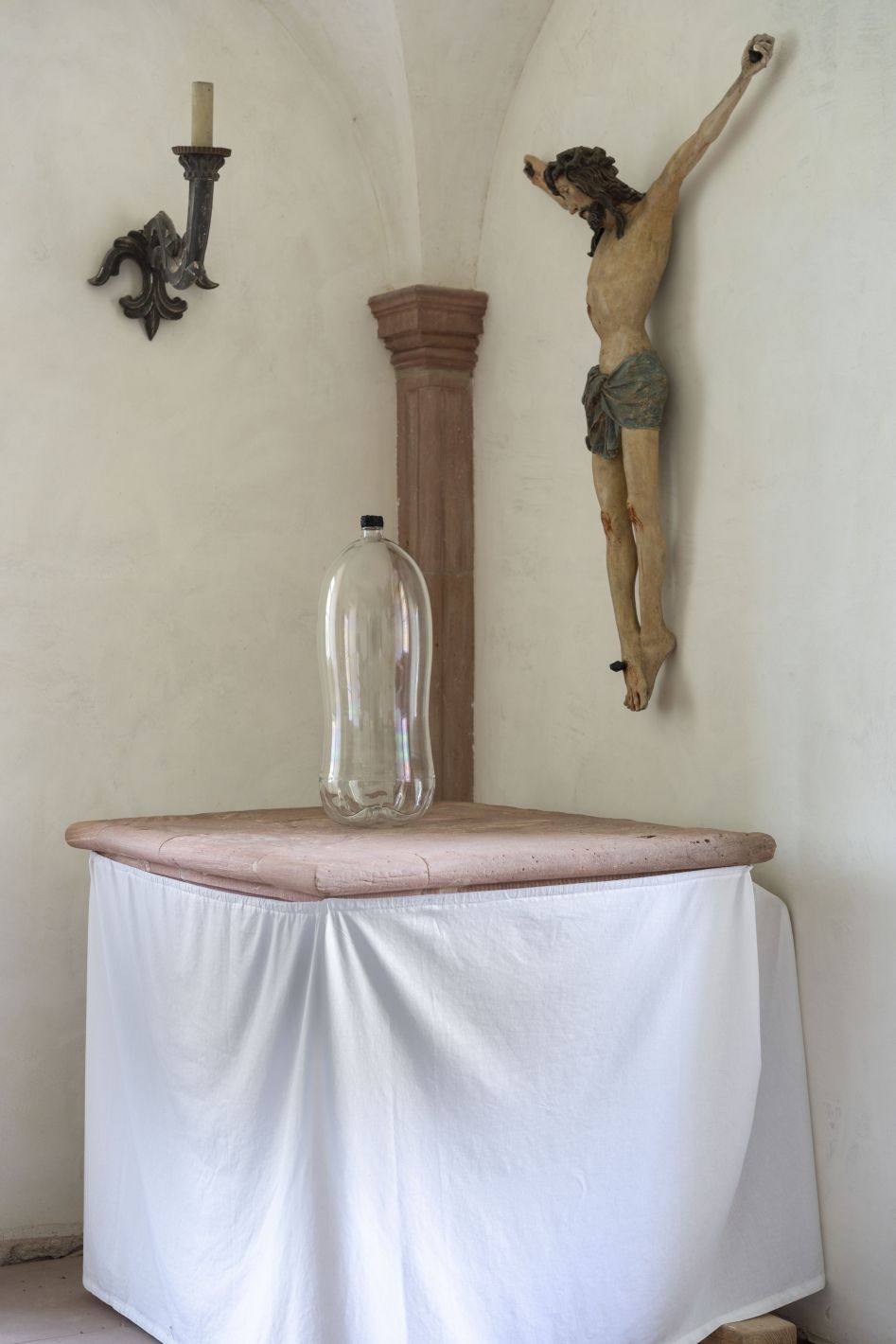
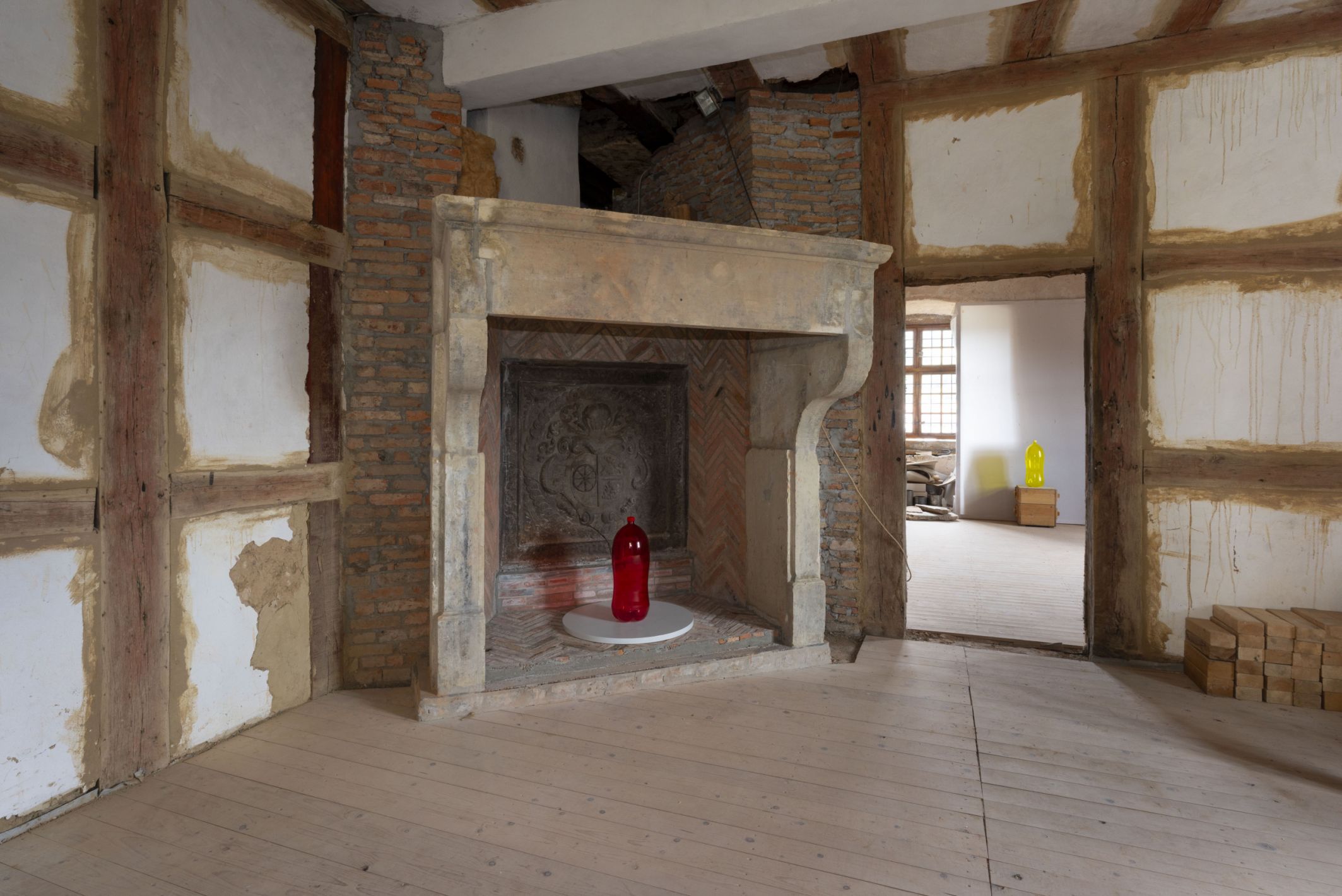
In the Schloss, Bouchet’s Keglon Bottles recur like displaced household objects, monuments or relics. Modelled on the ubiquitous two-litre plastic cola bottle but enlarged into fragile, hand-blown glass vessels, they combine the form of disposable packaging with the material presence of a precious object. Set within fireplaces, cabinets and historic rooms, they move between commodity, decorative object and ceremonial figure. This transformation is most pronounced where a transparent Keglon Bottle stands on an altar beneath the figure of Christ: mass-produced packaging acquires the presence of a reliquary.
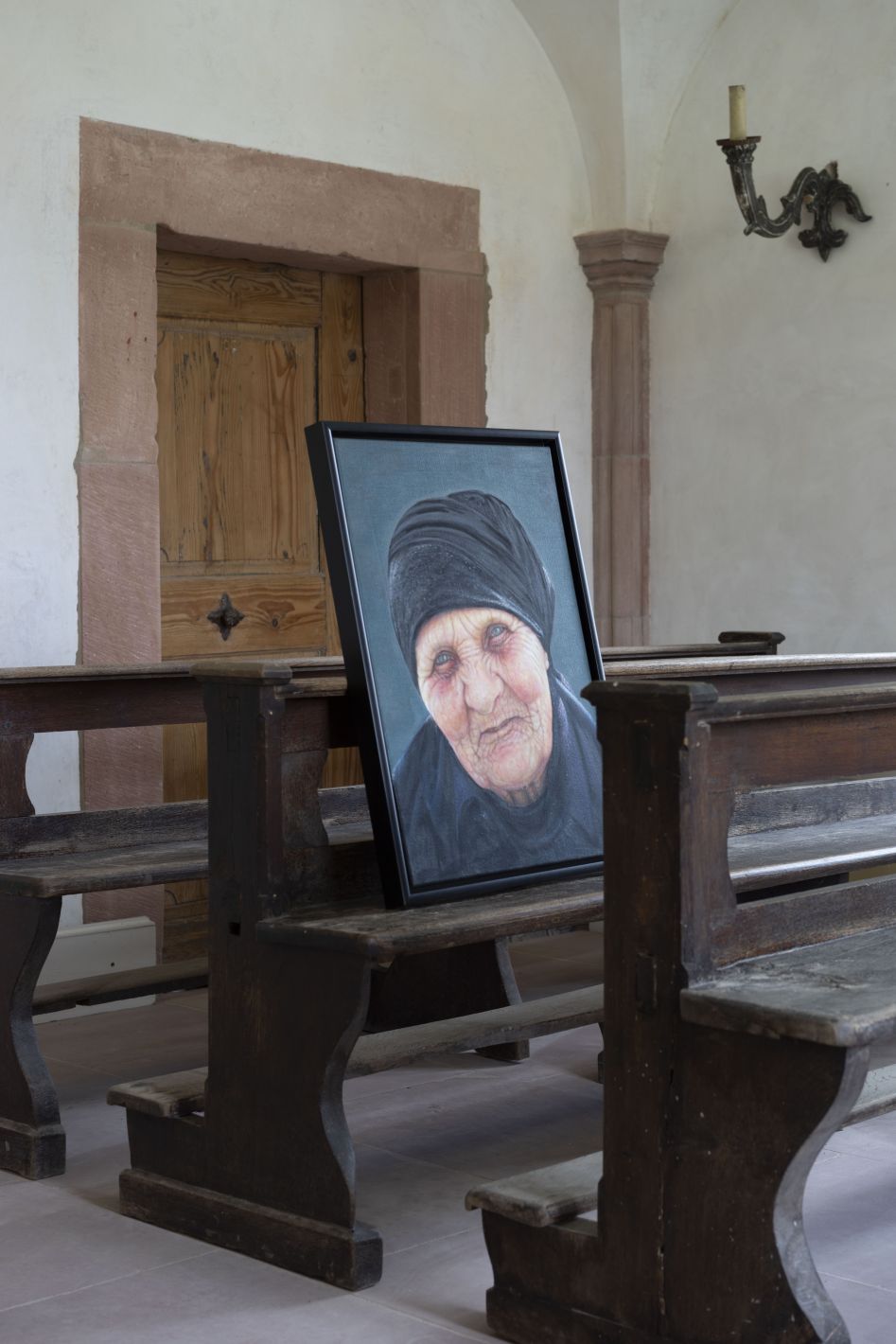
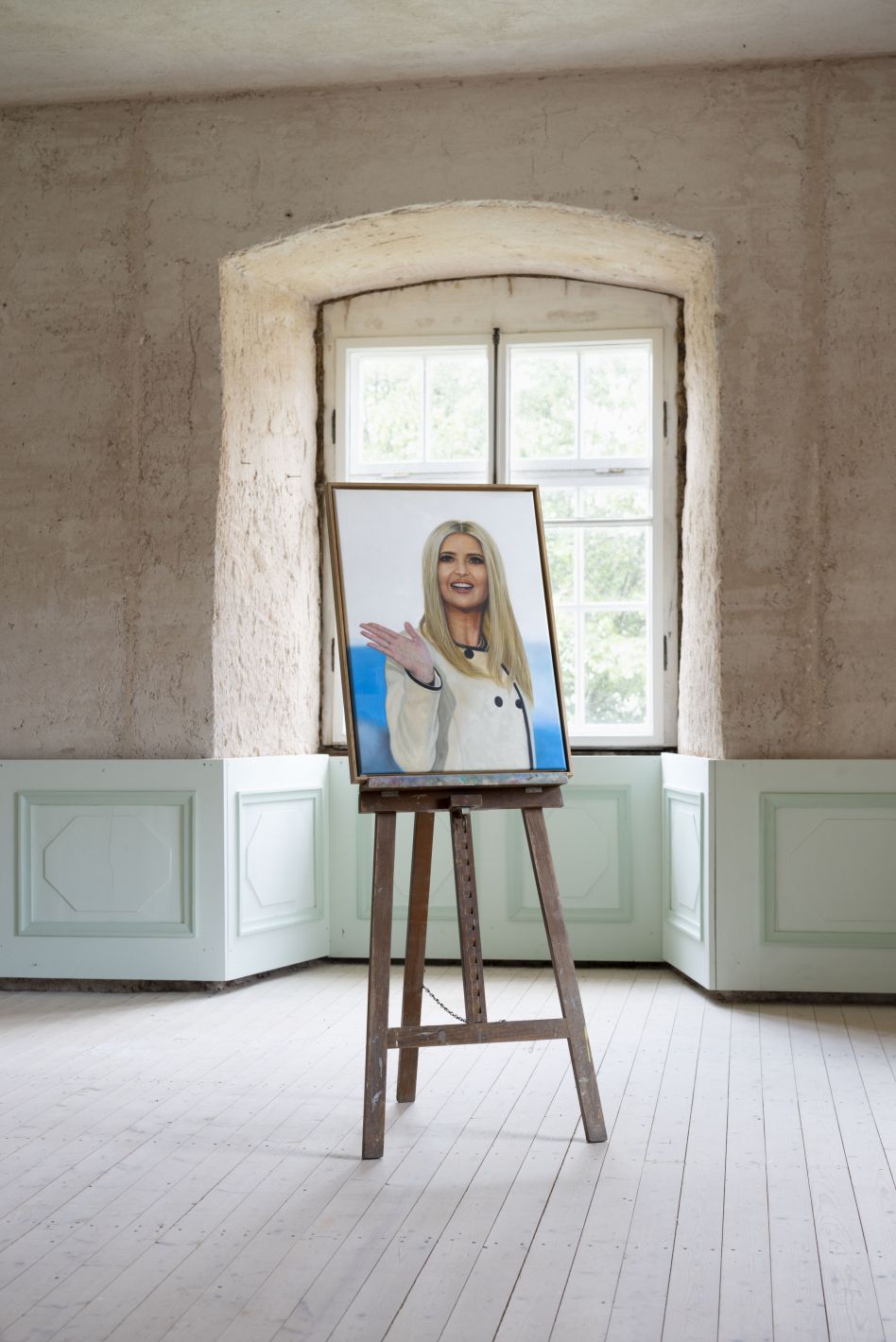
Nearby, Vera portrays Vera Putina, the Georgian woman who claimed to be Vladimir Putin’s biological mother after recognising him on television — a claim that was never substantiated. Her image introduces a story suspended between testimony, political mythology and mediated belief. A television image assumes the intensity of a devotional portrait. Elsewhere, Ivanka occupies a room formerly associated with dynastic family representation, placing a contemporary political and commercial dynasty within the setting of an older aristocratic one.
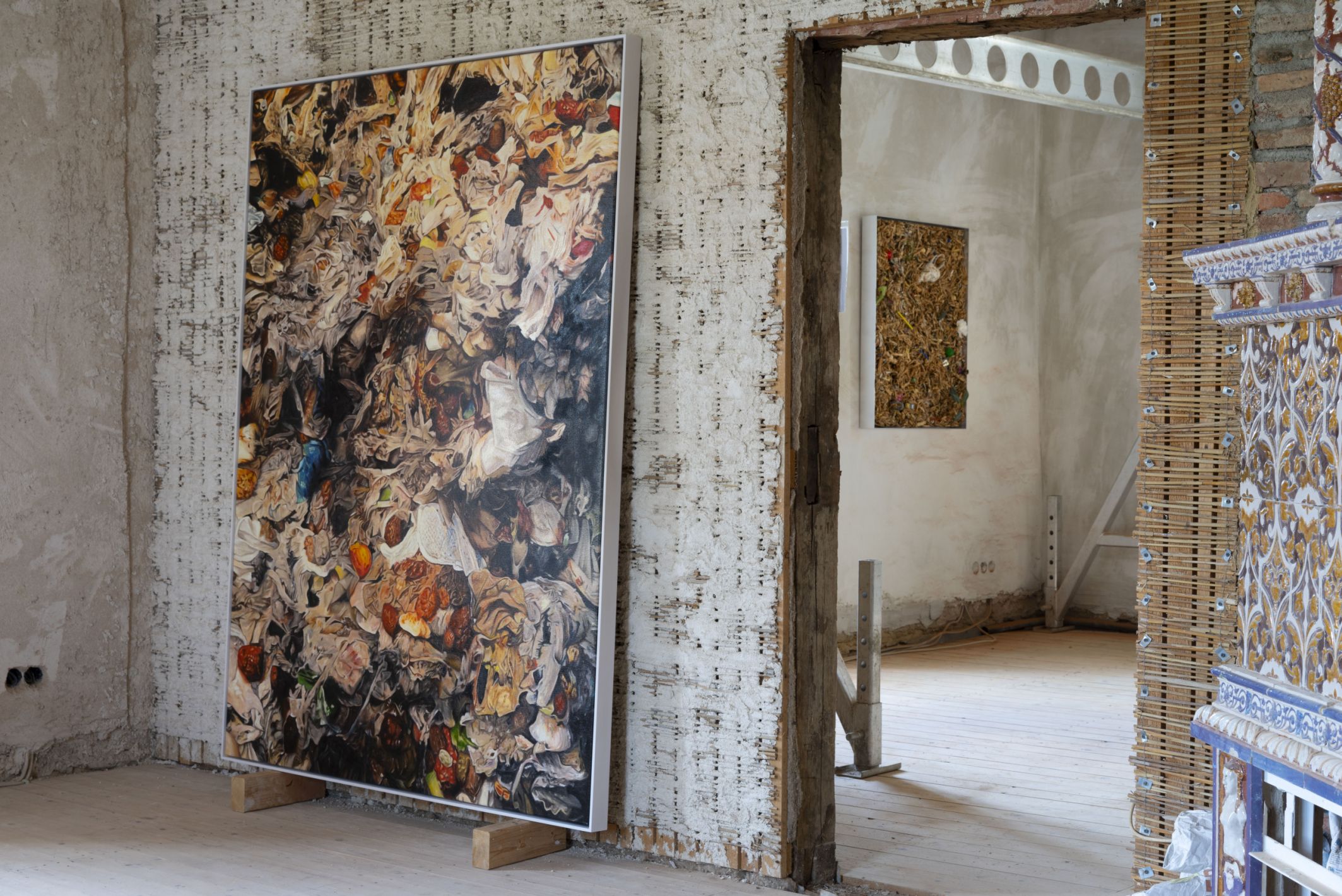
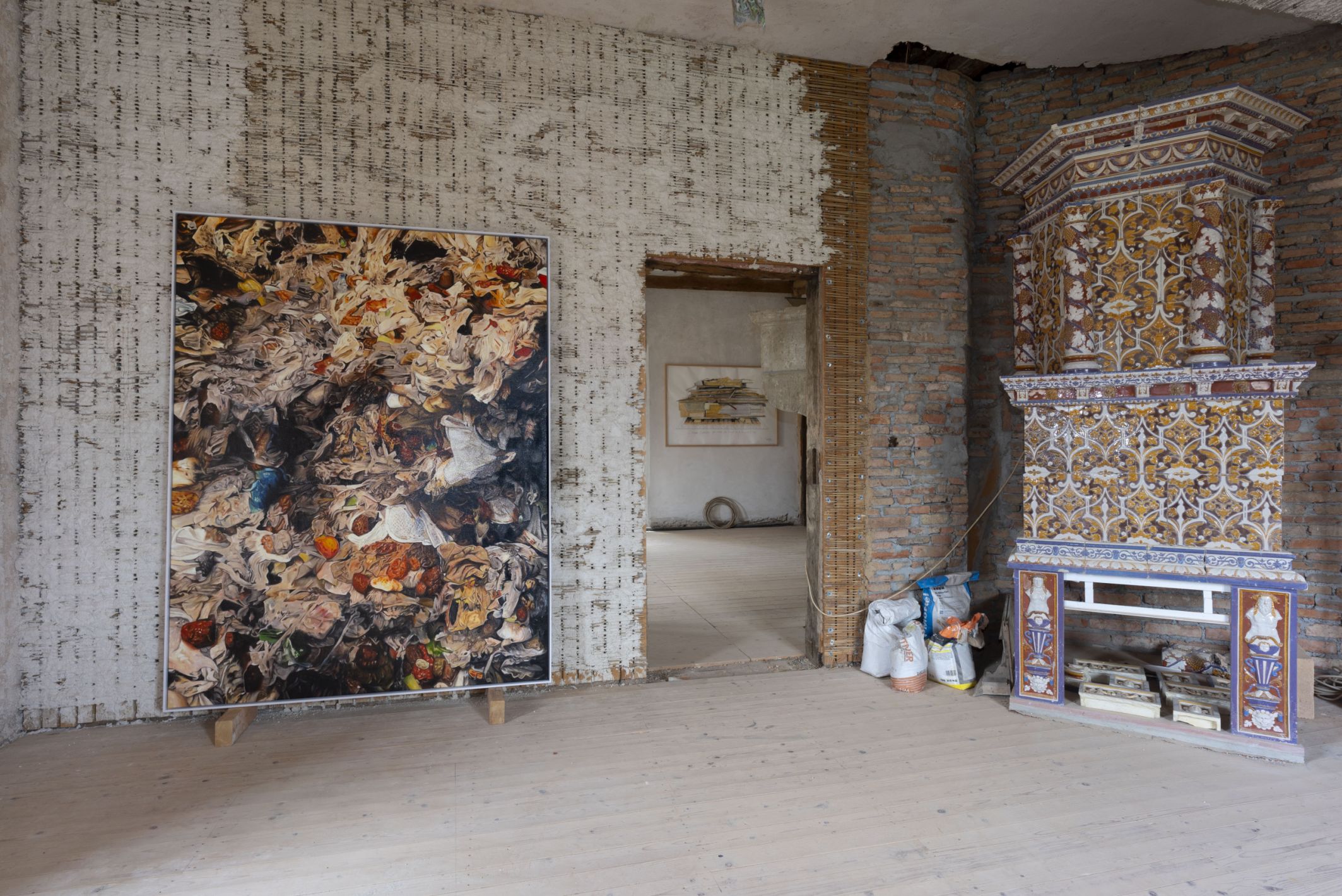
On the upper floors, the Bounty Paintings transform photographs of solid waste extracted at a Zurich wastewater-treatment facility into richly painted tableaux. The material appears at the brief moment before it is processed into homogeneous sludge: the physical residue of collective daily life, suspended before disappearance. Bouchet renders it with a density and luminosity reminiscent of Baroque painting and Dutch still life. The works recall the historical turn in Dutch painting towards the ordinary — food, objects, animals and domestic life — while finding beauty and pictorial intensity in what is usually overlooked, concealed or discarded. Against the worn surfaces and accumulated history of the Schloss, they become contemporary vanitas paintings: scenes of abundance in which what has been purchased, used and desired has already become waste.
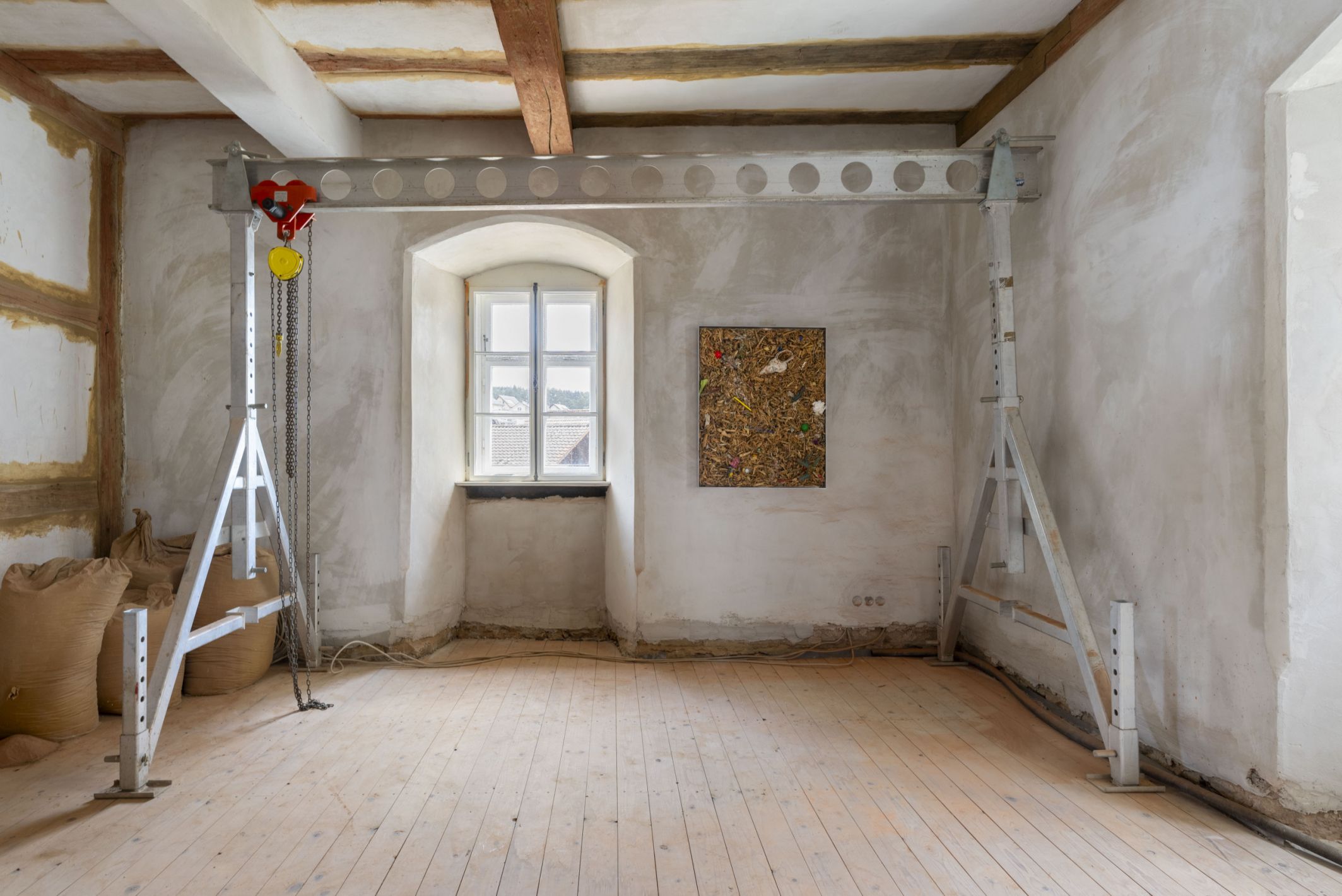
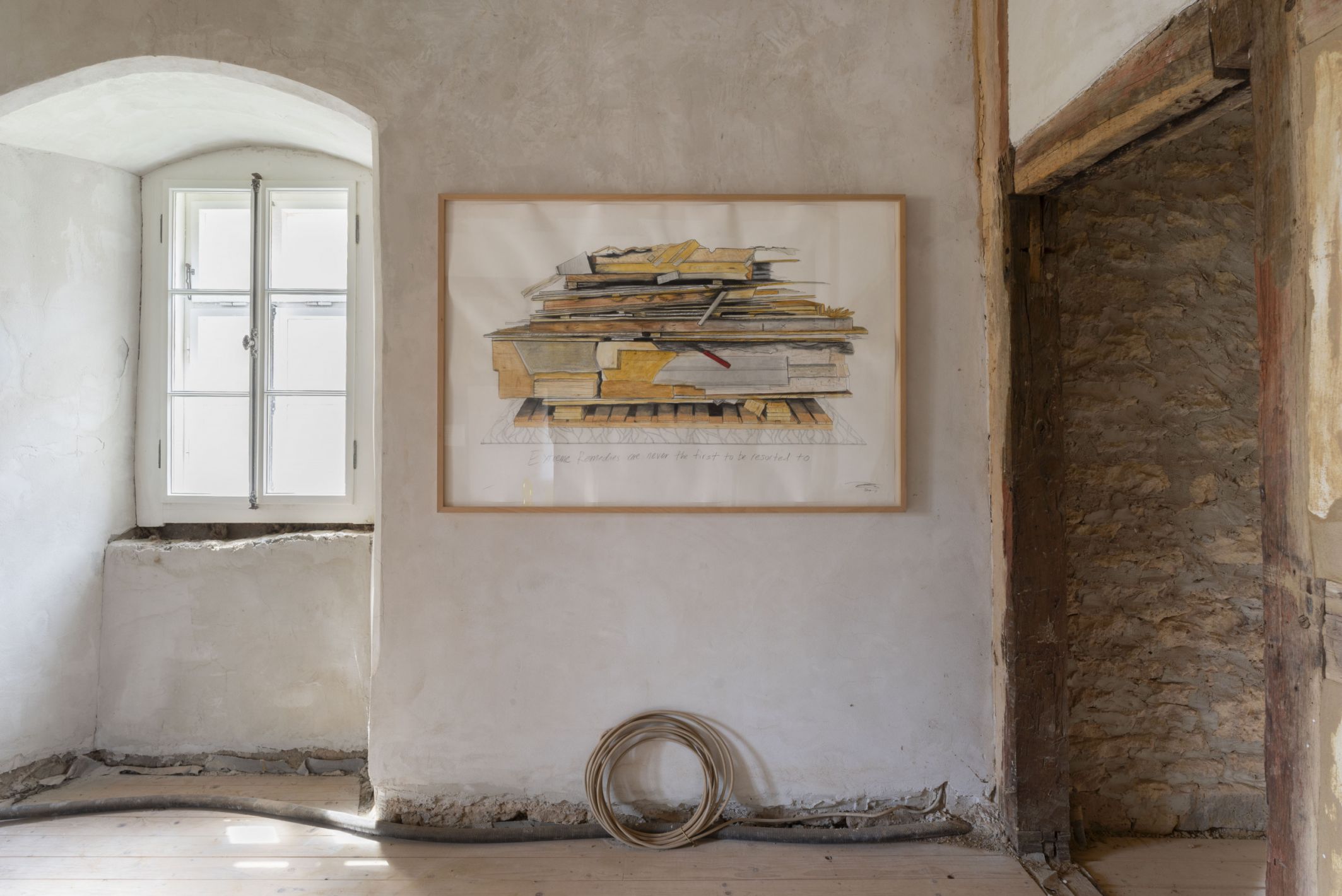
Two further works trace the continuing transformation of Watershed, the full-scale American prefabricated house Bouchet placed on the water during the 2009 Venice Biennale. The house was subsequently dismantled and reconfigured as the sculpture Sir Walter Scott for the Schirn Kunsthalle Frankfurt. In Wiesen, Extreme Remedies… records one of these architectural stacks, while Sench incorporates shredded wood from the sculpture itself. The suburban dream house passes through successive states — architecture, image, wreckage, sculpture, drawing and raw material. Its identity remains contingent on the moment and form in which it is encountered.
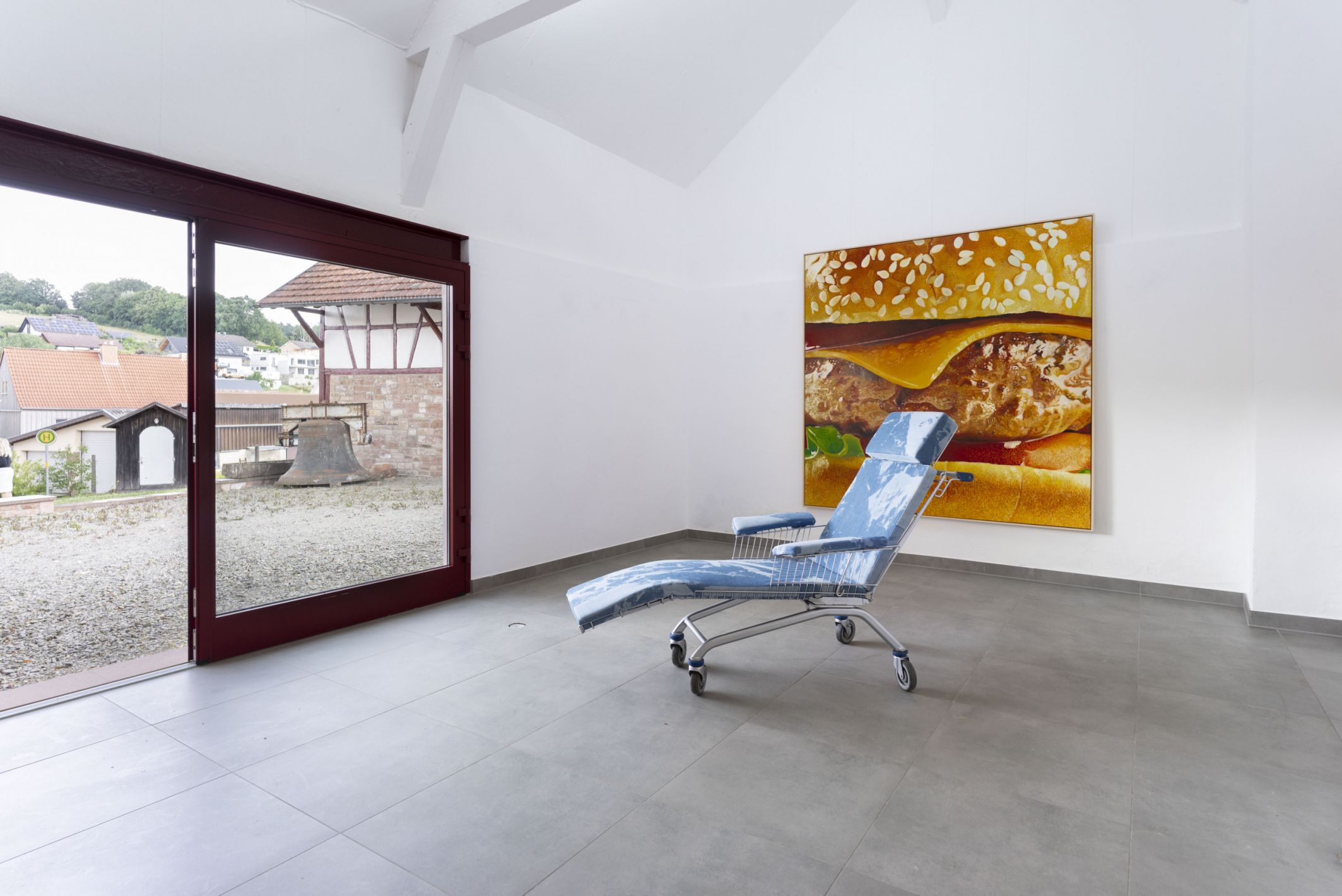
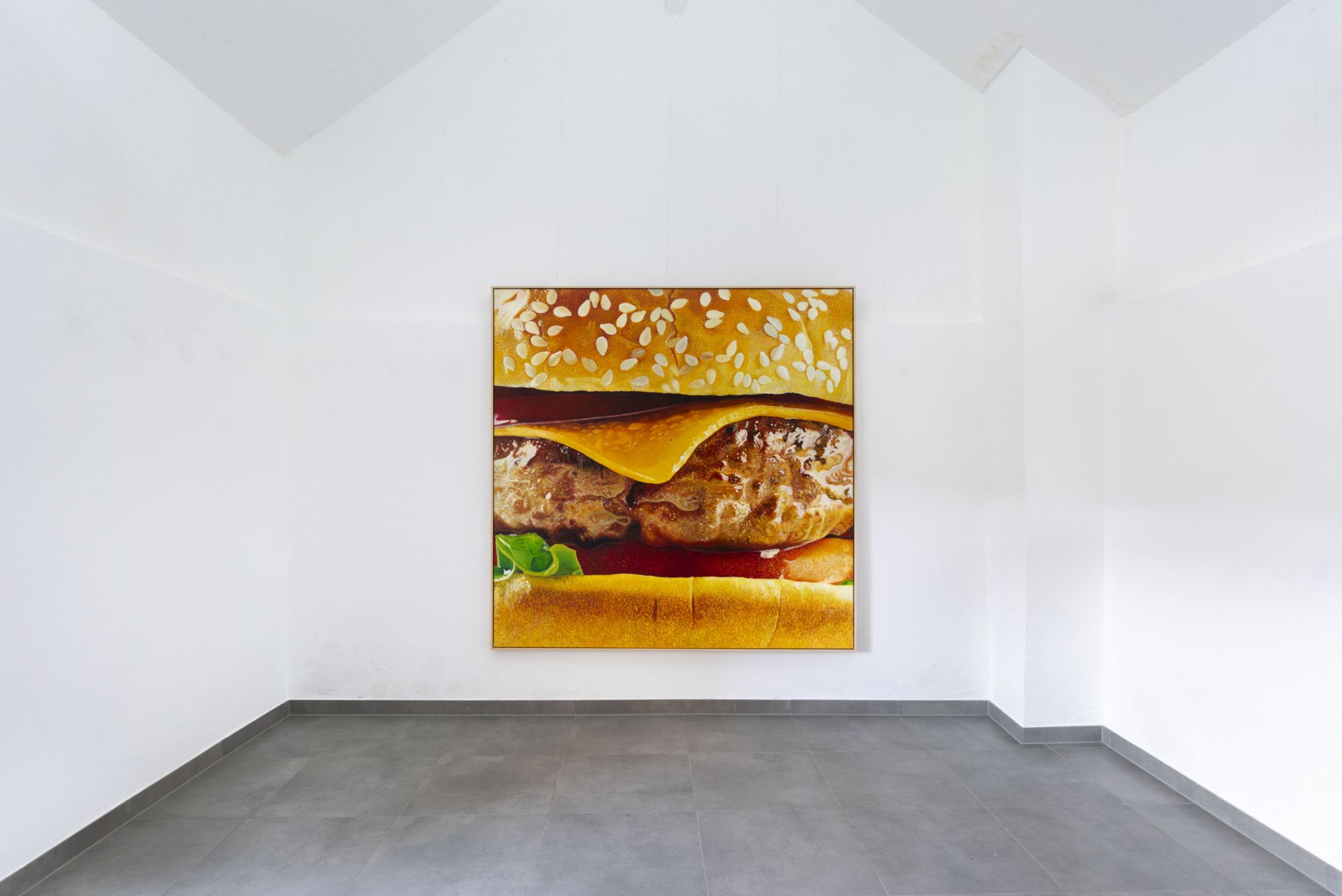
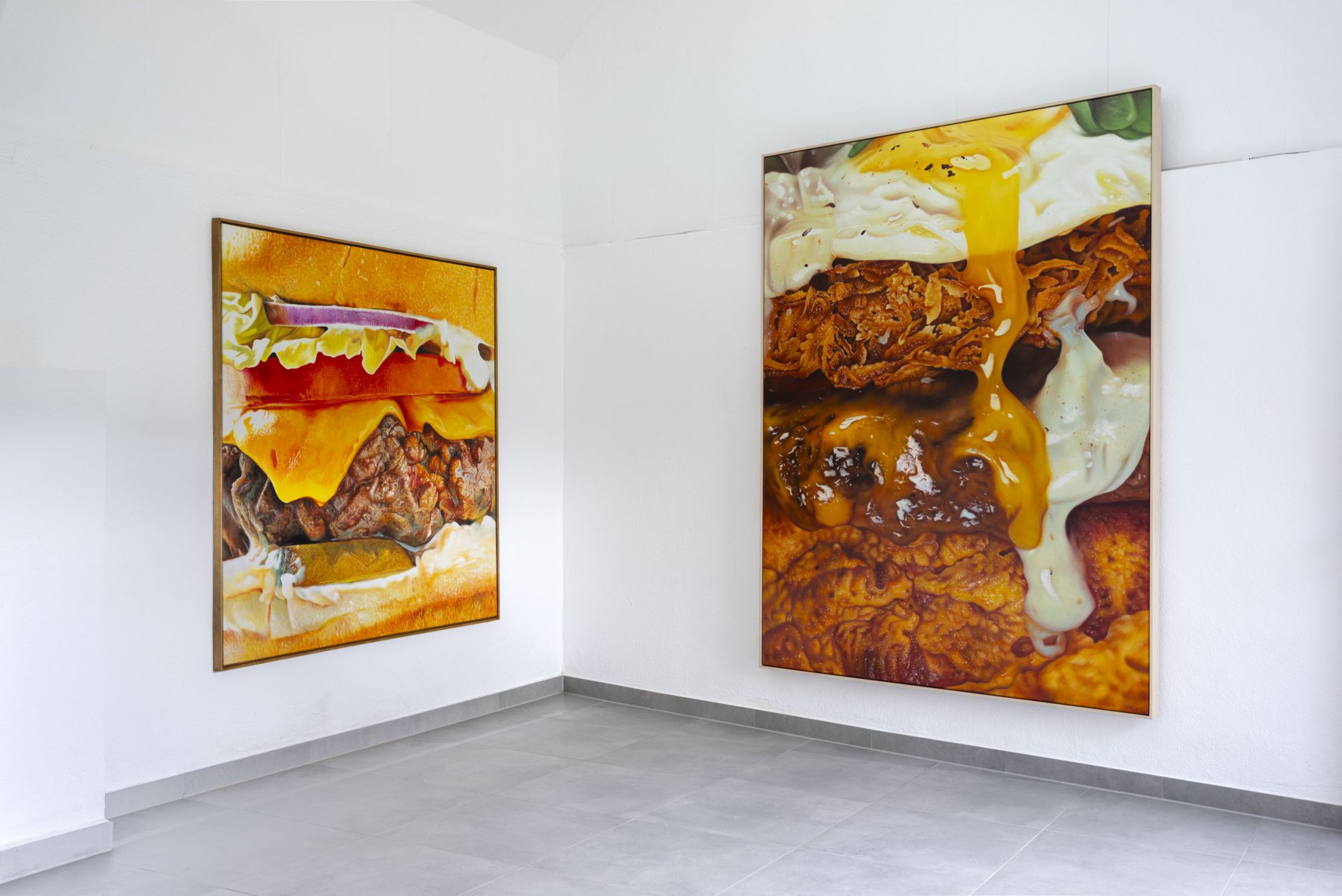
The route ends in the former agricultural barn with three monumental Burger Paintings and a Sylva Lounger. The paintings enlarge the visual language of fast-food advertising until layers of meat, cheese, sauce and bread become excessive, almost abstract landscapes. Opposite them, Bouchet transforms a shopping cart — one of the most recognisable instruments of consumer choice — into a reclining chair. The lounger invites visitors to pause within this supersized scenery, caught between appetite, comfort and spectacle, while the surrounding countryside remains visible beyond it. Familiar images of consumption are pushed to the point at which attraction and excess become inseparable; the seductive tips into the grotesque without ever losing its visual appeal.
The exhibition’s title describes its central proposition: meaning depends on context. Rather than positioning itself outside consumer society, In Depends inhabits its forms, pleasures and contradictions. Bouchet neither neutralises their appeal nor reduces them to symbols of excess. Humour, seduction and critique remain active at the same time. Across the exhibition, the everyday is neither simply celebrated nor condemned, but made strange enough to be seen again.
all images © Jakob Otter